
A digital showcase for an award-winning novelist and journalist
CHARLOTTE MENDELSONAn online presence that stays current
Charlotte Mendelson produces a staggering amount of content. She is an award-winning novelist — WIFE, The Exhibitionist, Rhapsody in Green — writing her eighth book. She writes a regular gardening column for The Observer, plus travel pieces and essays for the same paper. Her journalism appears in the New Yorker, the Financial Times, the Guardian, and the Sunday Times. She writes introductions to other writers’ books, teaches, appears on podcasts and radio, and speaks at events. This year alone she's recorded an audiobook and competed on a New Yorker quiz show.
“It would be a huge weight off my mind.”
None of her current work was consolidated, updated and streamlined in one place; and there was no realistic way for her to keep it current.
Her website is her shop window: the place a reader or an editor lands after Googling her name, unfortunately it had remained frozen. A homepage still saying "pre-order now" for a book out in paperback a year earlier, no trace of a year's worth of Observer columns, no recent events, no podcasts. As Charlotte told me:
“I always have ‘update website’ on my to-do list, and I always just feel despair when I look at it.”
When we first worked together, I built her a site I described as a Lamborghini: elegant, bespoke, and as it turned out, impossible for her to drive.
When we reconnected, we didn't start with design. We started with her output: an inventory of everything she writes, says, and publishes in a typical year — and where each piece actually needed to live.
The insight that shaped everything: a novelist and journalist's website shouldn't try to host her output, it should showcase it. Her journalism already lives on the Observer's and the New Yorker's own pages, kept current by their staff. Duplicating it on her site was double work with half the shelf life.
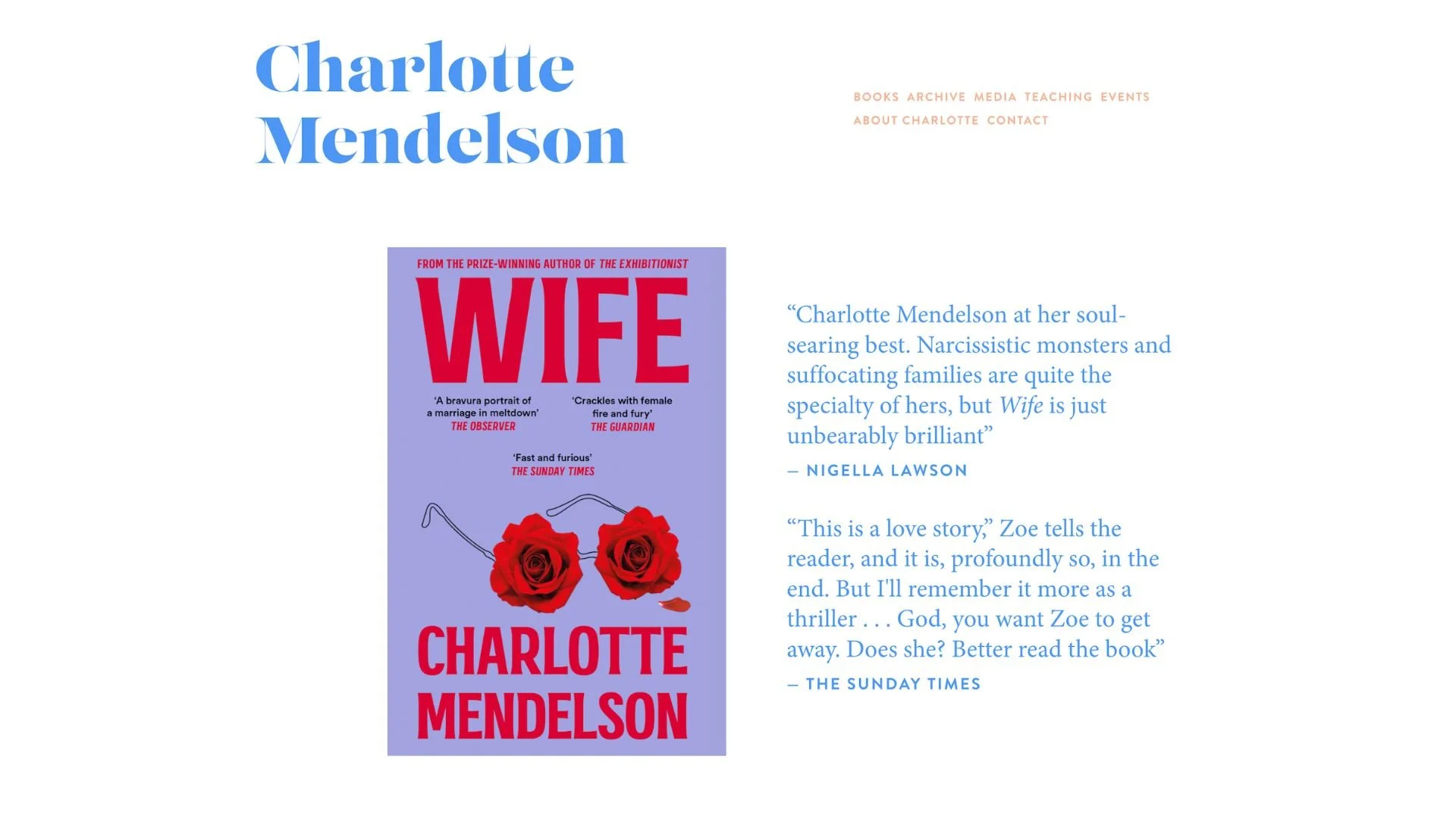
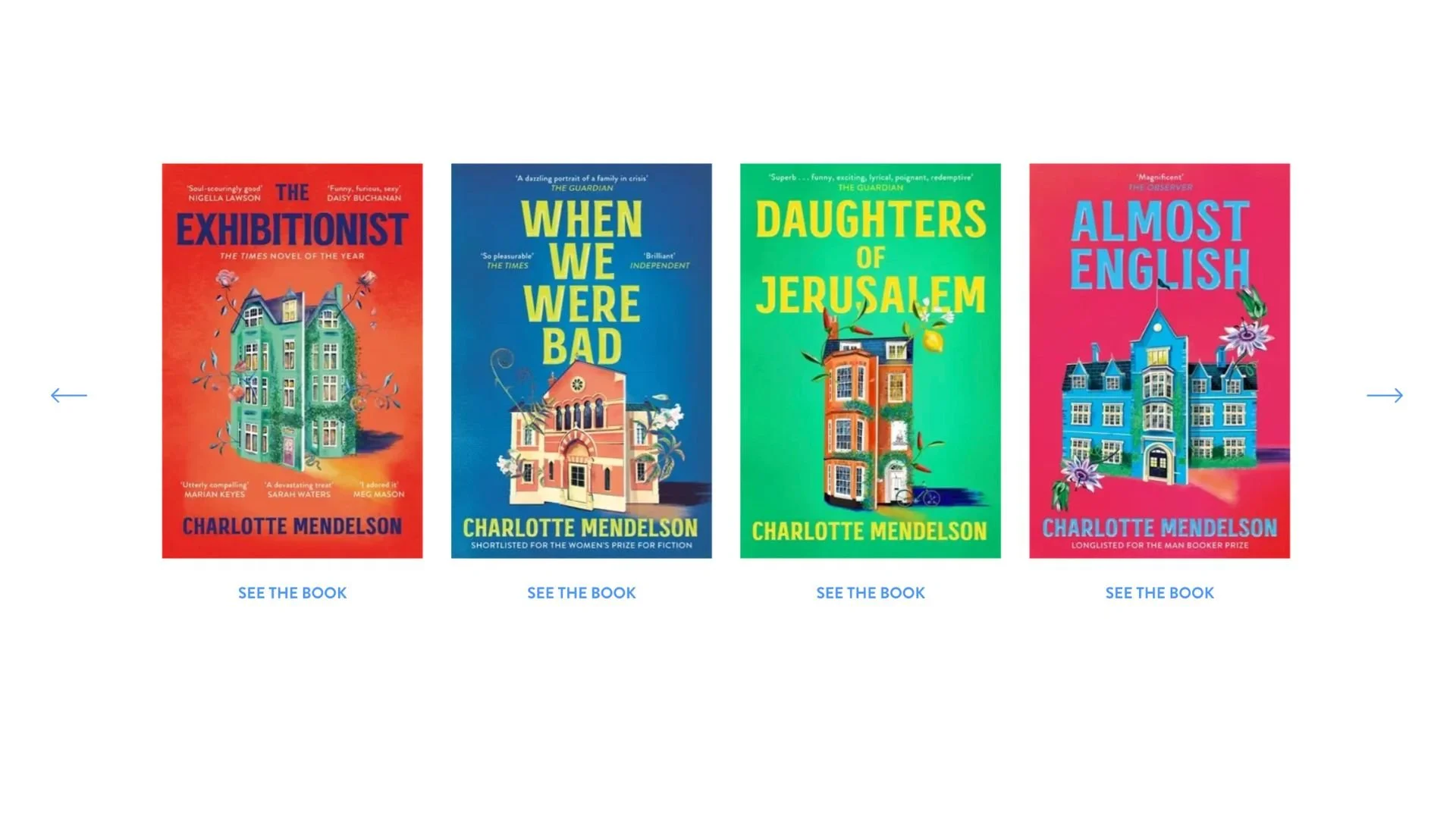
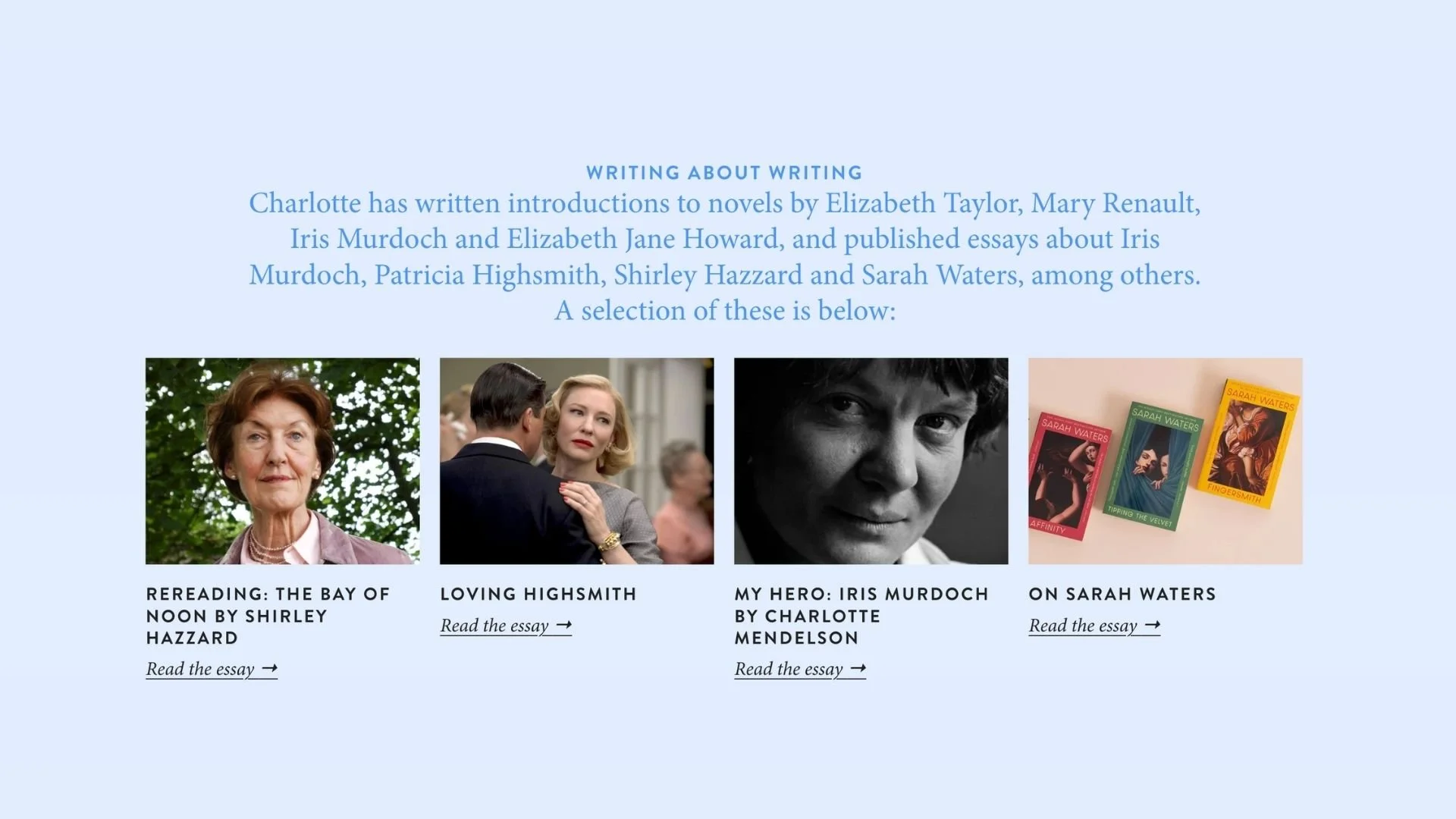
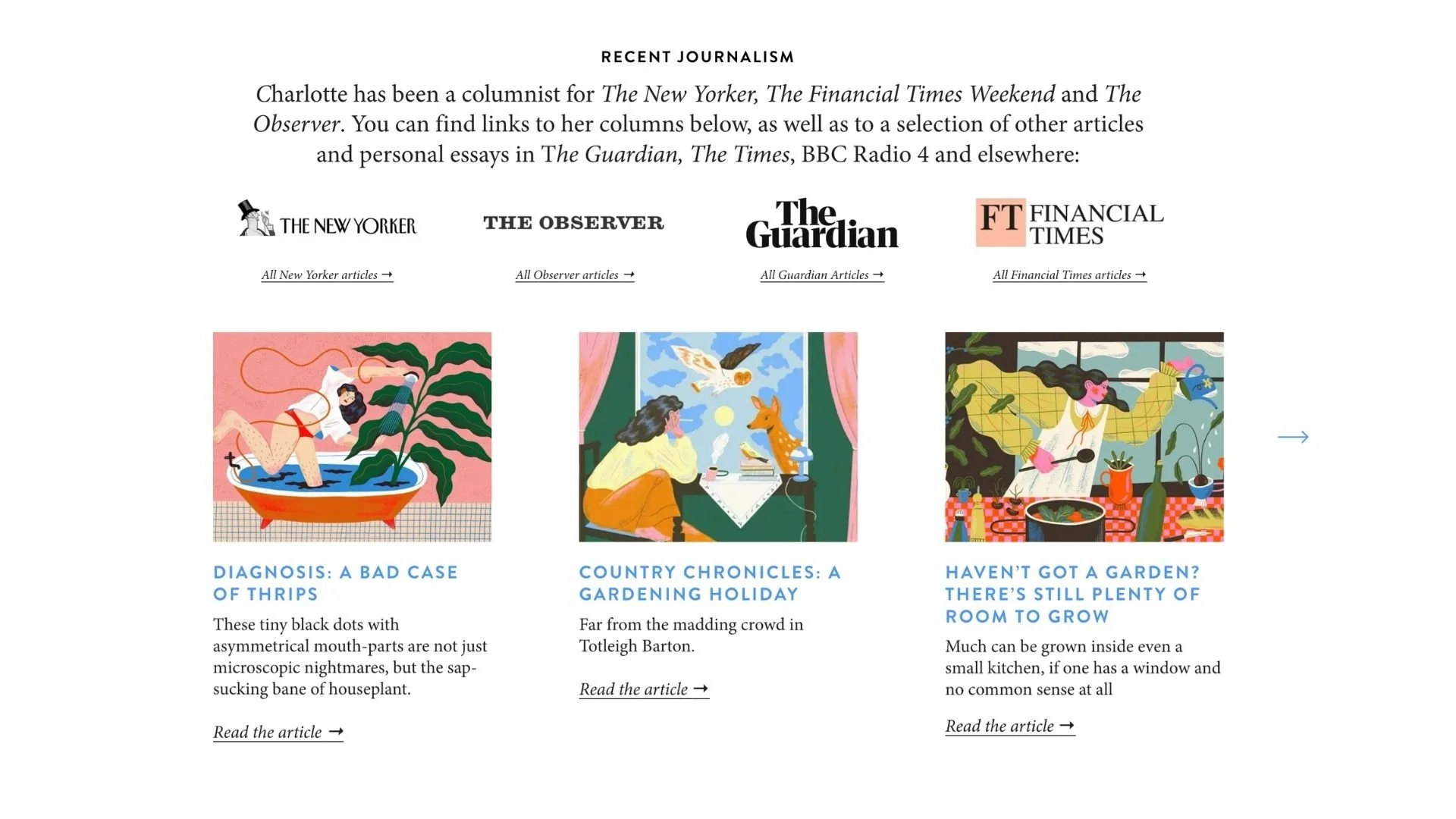

So we rebuilt her online presence around three principles:
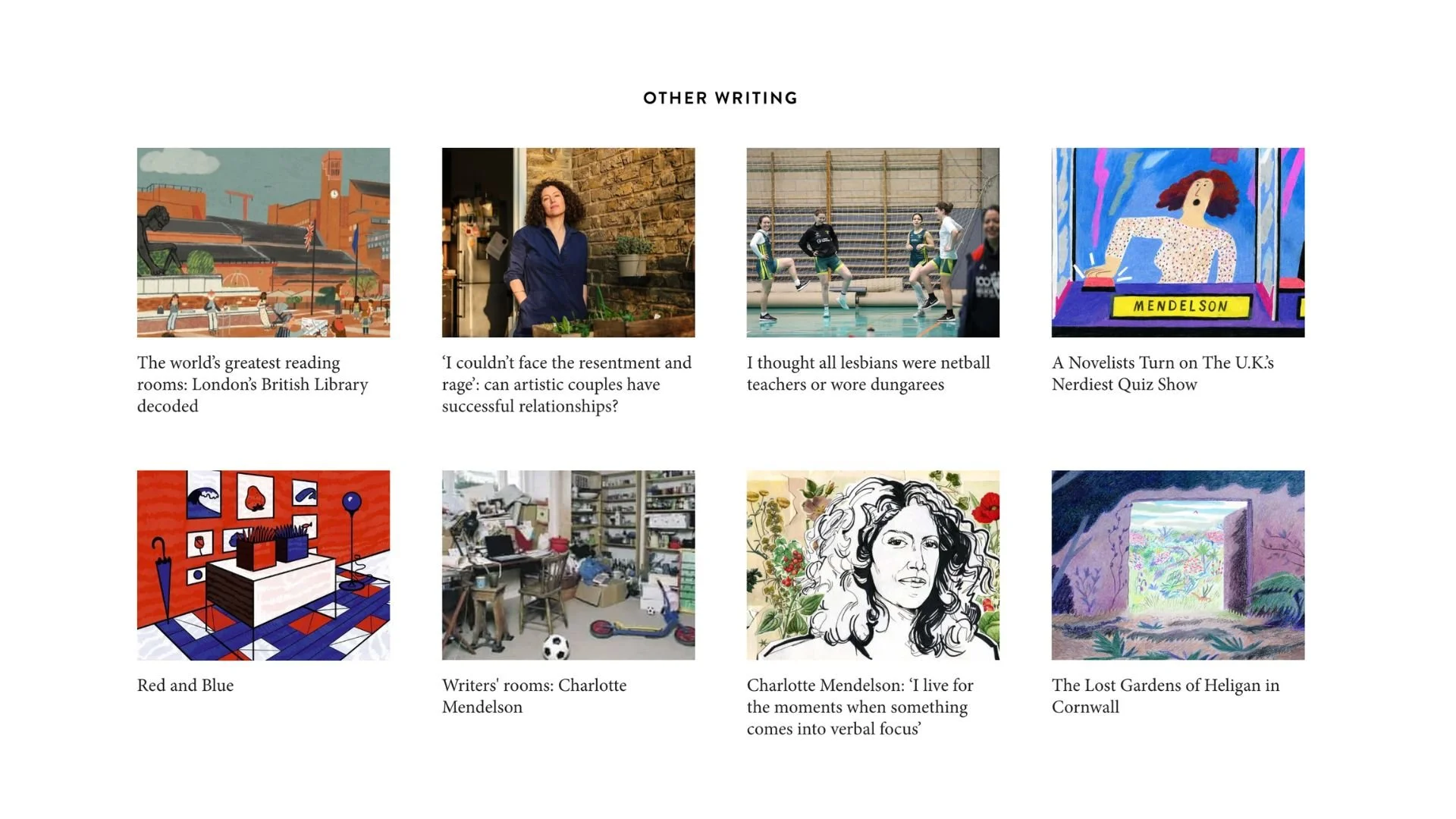
Consolidate, don’t duplicate. Publications get logo cards linking to her author pages on the original publication, which update themselves. Selected pieces link straight to the source. Her site stays fresh because someone else's staff keeps half of it fresh.
Showcase the current, archive the rest. The homepage carries only what changes: current books, latest columns, recent essays, events; in modules she can swap in minutes. Older work lives in a curated, clearly labelled Archive: kept, featured, or discreetly unpublished, together in one working session. Nothing is lost; nothing is clutter.
Match the maintenance to her real rhythm. Charlotte updates in an afternoon, every couple of months. So the recurring tasks were engineered to that cadence: swap the latest column, add an event, and when a new book arrives, simply clone a template page. That’s the whole job now.
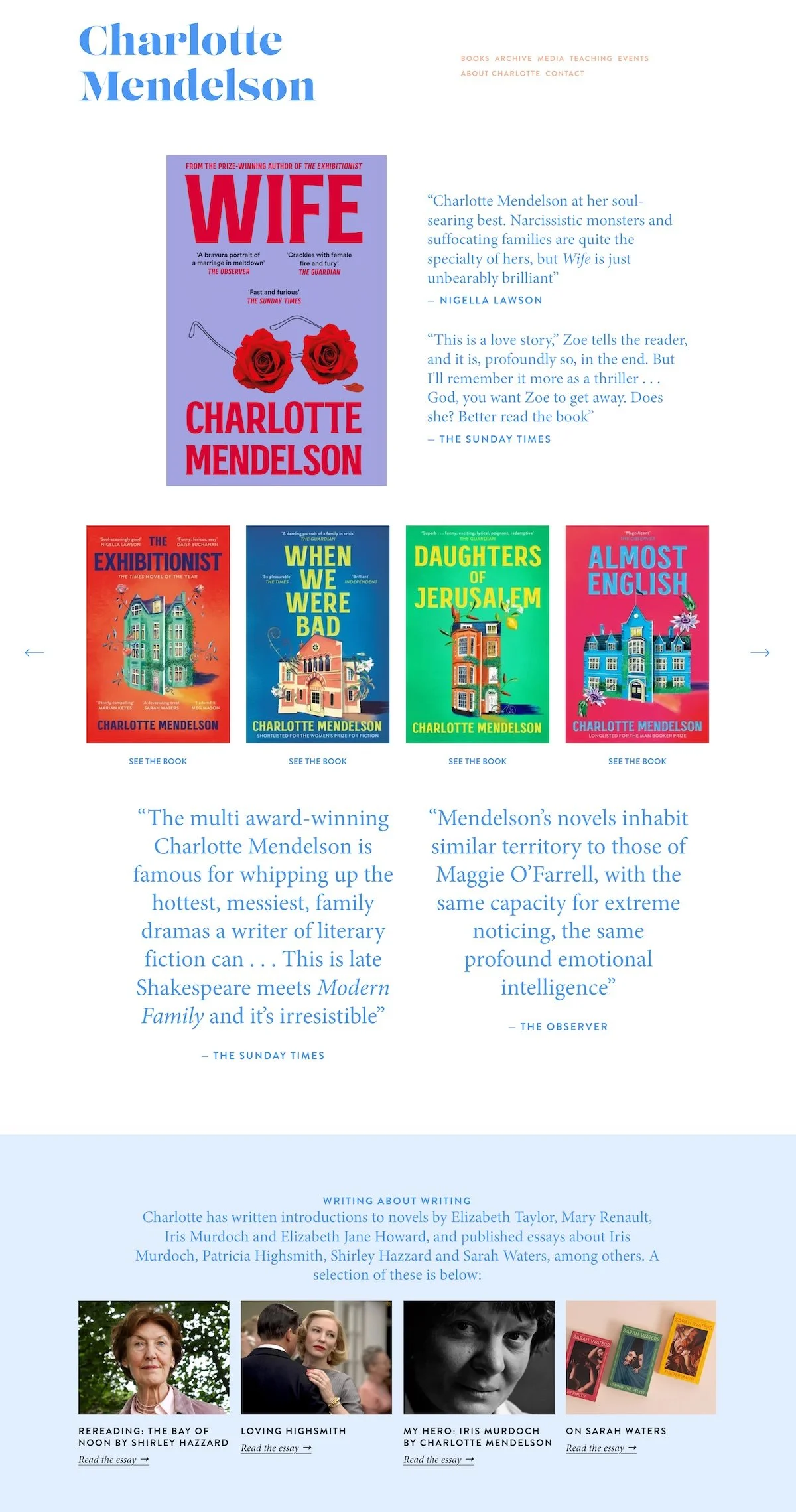
COMPLETE LIST OF SERVICES PROVIDEDThis was presence management, not just a website: taking a constant stream of professional output and giving it one coherent, low-maintenance home.
-
→ Full inventory of her ongoing output: columns, essays, journalism, introductions, events, media appearances
→ Site purpose definition: a springboard to her books and a showcase for her writing — not a repository
→ Content strategy: outlink to publisher-maintained pages instead of duplicating paywalled work
→ Architecture for two content rhythms: high-frequency current work vs. evergreen books and archive
-
→ Migration from legacy Squarespace 7.0 to 7.1, preserving the design she loved
→ Zero downtime: splash page during the rebuild, account and subscription continuity handled behind the scenes
→ Legacy blog-hack structures replaced with native, easy-to-update modulesMigration from legacy Squarespace 7.0 to 7.1, preserving the design she loved
-
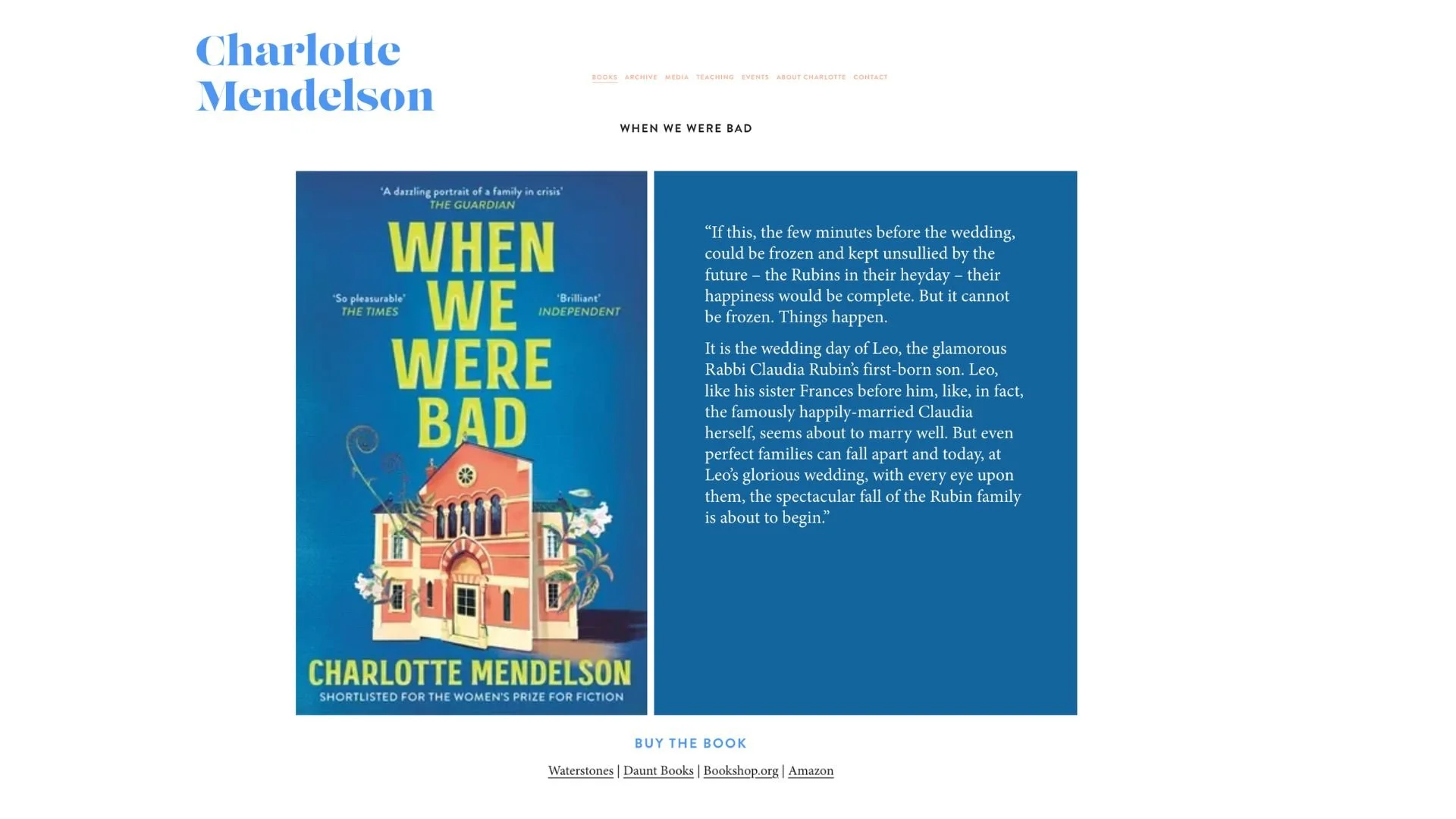
→ Homepage built around the current book and backlist, with covers matched to the editions in bookshops
→ Two living content streams — writing about writing, and recent journalism (Observer columns, Times essays) — kept deliberately distinct so her novels stay front and center
→ Publication logo cards (Observer, New Yorker, FT, Guardian, Sunday Times) linking to automatically-current author pages
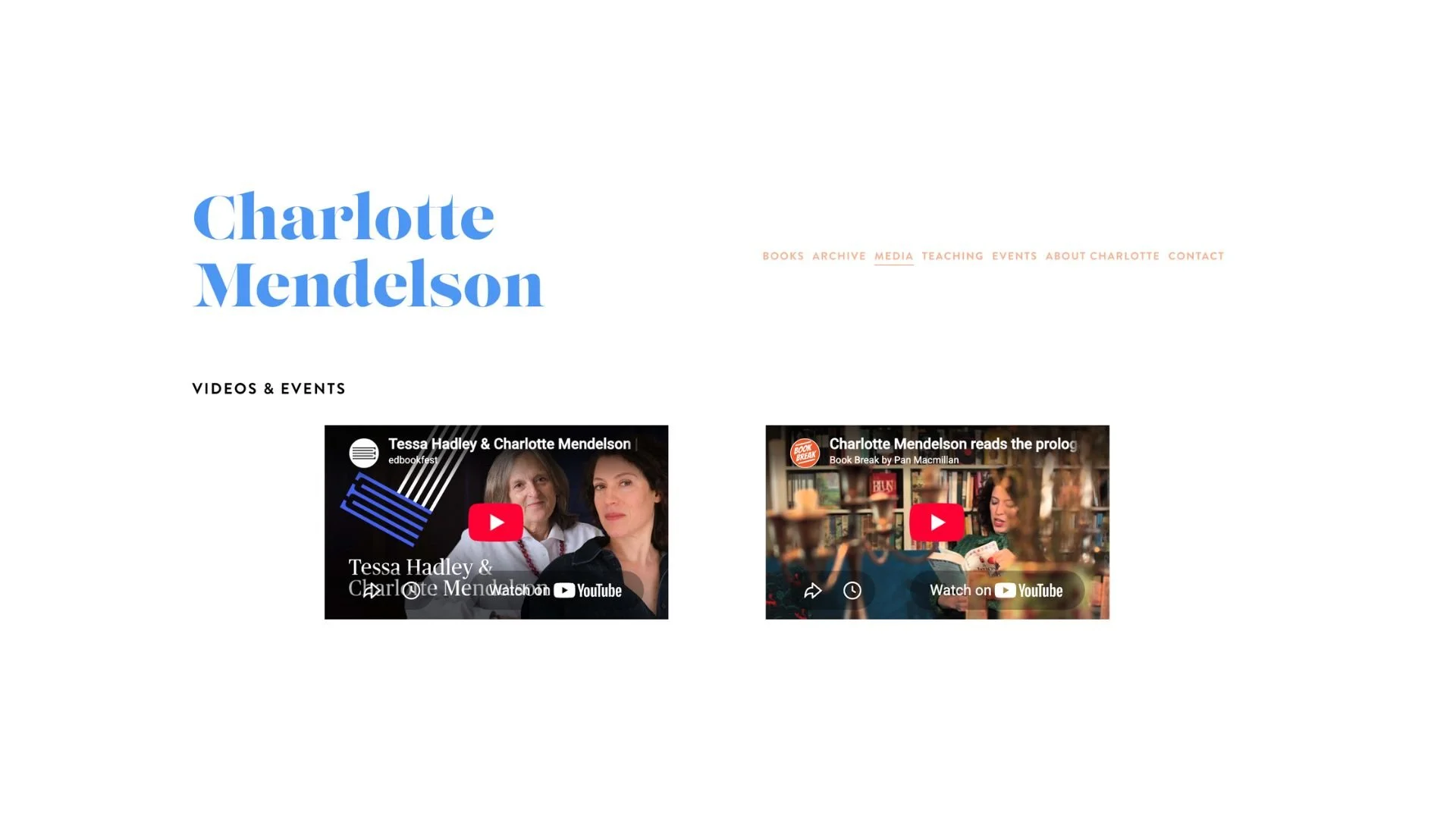
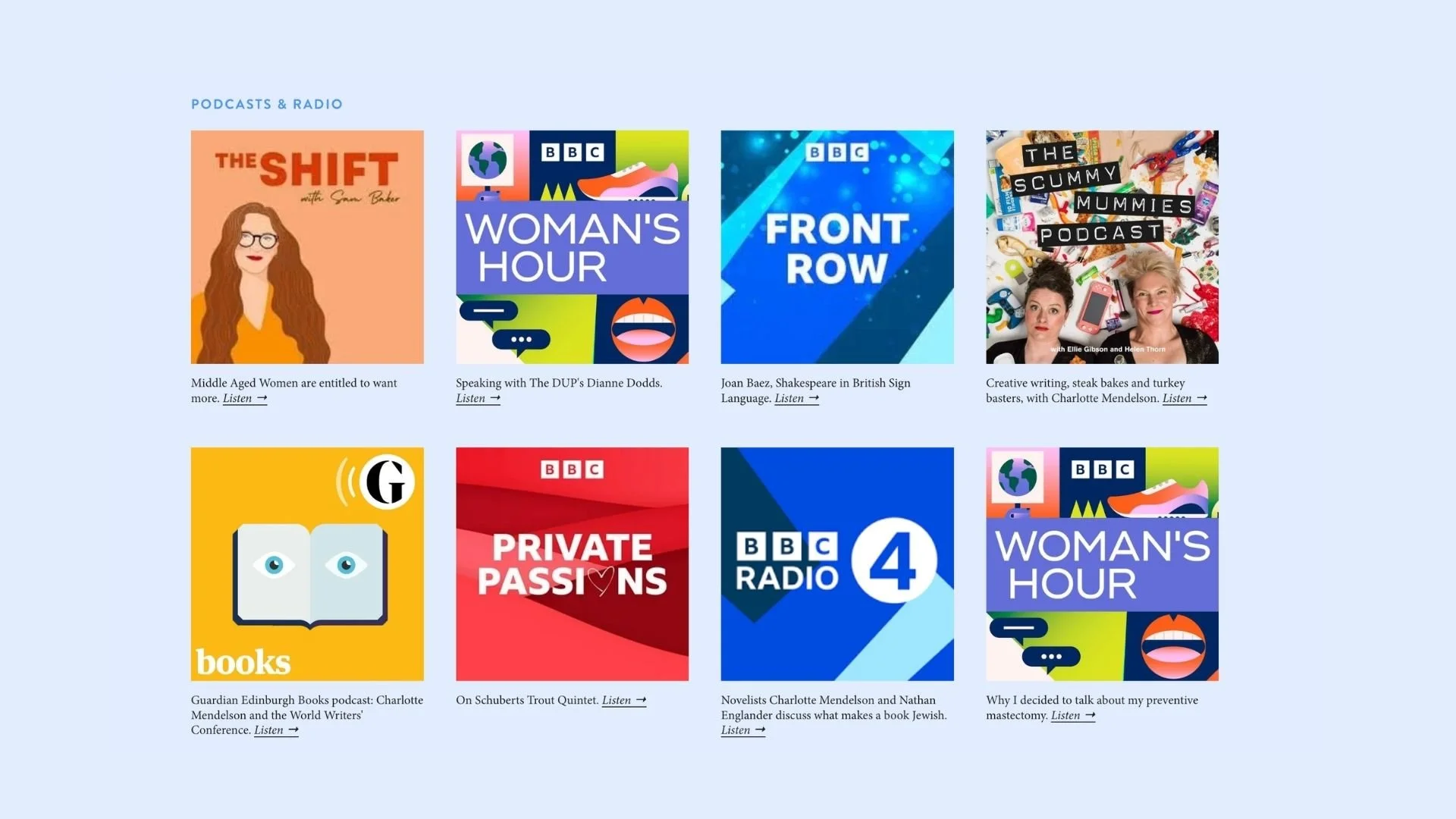
→ Media page consolidating podcasts and radio: direct episode links where they exist, show pages where they don't, plus a Spotify discovery link
→ Events and teaching pages she can update herself
→ Scroll-to-load-more so her growing list of published pieces never needs pruning
-
→ A live, collaborative triage of her entire content backlist: keep, feature, or draft — nothing deleted
→ Archive relabelled and curated as a professional record, with her own featured picks surfaced to the homepage
-
→ Customized video tutorials in place of static handovers
→ Shared content document so she could write in her own words, on her own schedule
→ Guided walkthroughs of her three recurring update tasks, at her own cadence
THE RESULTA presence that finally moves at the speed of her work.
Charlotte’s site now behaves like what it is: the public face of an award-winning novelist and journalist with a regular columns and a book coming. New journalism reaches the homepage within a single afternoon of effort, not a fraught delegation. A year of Observer columns is finally visible. Her proudest pieces are showcased; the rest is consolidated, organized, and out of the way.
When the next novel is ready, the structure is waiting: one cloned book page, one carousel update, done. And readers who find her through the Observer — or the New Yorker, or a podcast — now land on a site that shows them the whole writer, current as of the last two weeks.
