9 Important Reasons Why You Still Need a Website in 2026
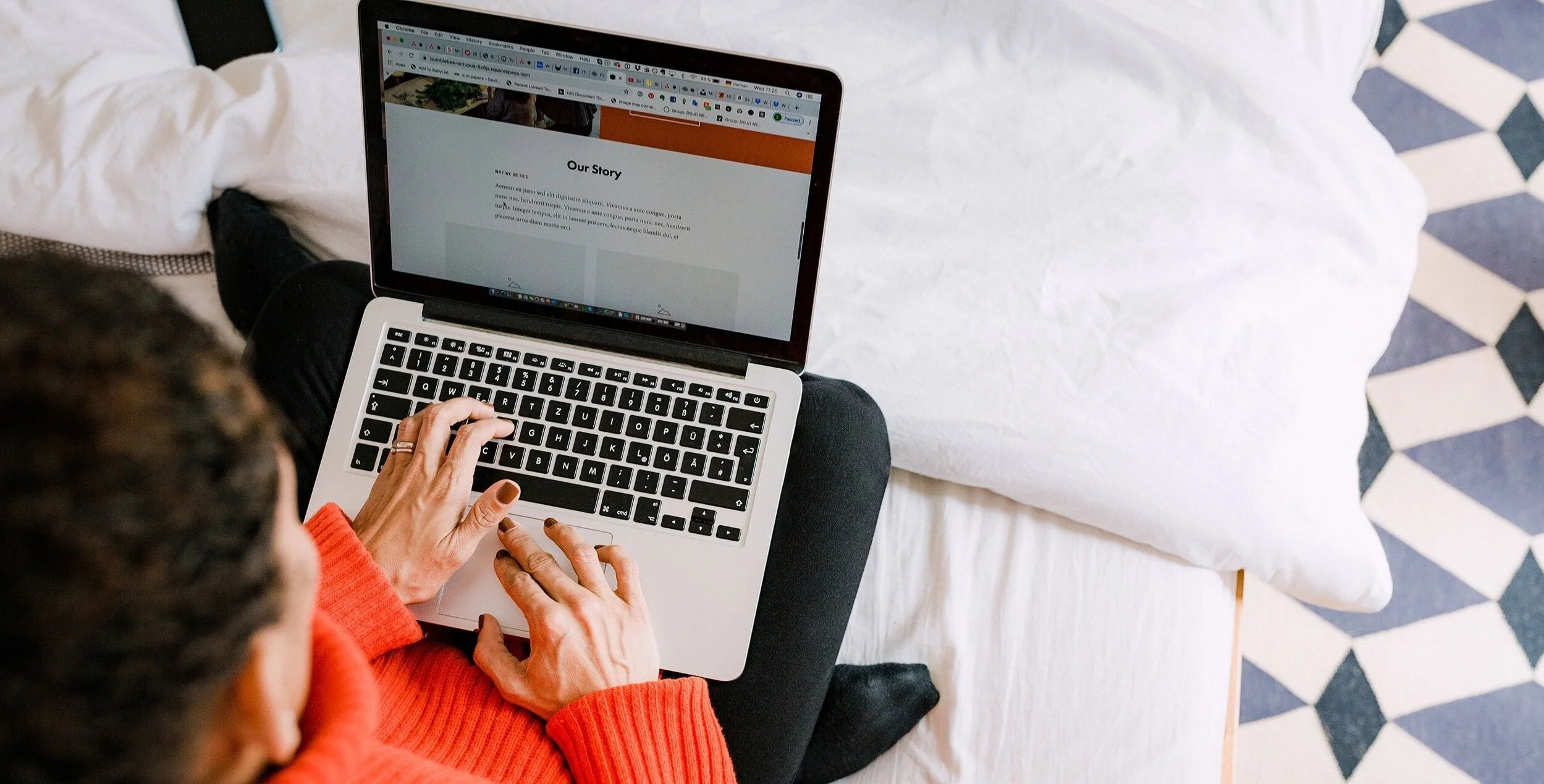
In the age of Substack, TikTok, LinkedIn, and Instagram, the humble website can seem unnecessary. Why not make things easy (and cheap) by jumping on an existing platform like Substack or LinkedIn, or using the web solution provided by your institution?
If you regularly publish ideas, the seemingly obvious move is to share them on an existing platform (Substack, LinkedIn) with a ready audience. You might find it easiest to use the web tool provided by your institution (think tank, university) or take your thinking into the wilds of social media for even broader reach (I’m looking at you, #Philosophytok).
The best way to think about your website is not as a calling card to set up and forget, but as a powerful public profile that is always working for you and remains constant, even if your professional life is dynamic.
If you are sought out for your expertise on podcasts, conferences, and publications, relying on these platforms is not always ideal.
Here’s a helpful rule of thumb:
You need a website only if one or more of these are true:
People regularly Google you (media, clients, event organizers, publishers)
You want control over how your work is presented (not just on LinkedIn)
You do consulting and want inbound inquiries to feel credible and intentional
You publish ideas and want a stable “home base” you control
You are a sought-after speaker at conferences or a guest on podcasts to share your expertise
You’re a published author
Here are nine reasons why an updated website for your body of work is more important than ever.
#1 Reputation Management
Your ideas should be associated with your name.
If you don’t have your own website, it’s harder for you to show up for search terms and ideas that you’ve either developed yourself or greatly contributed to. Your site is the only digital property you can optimise for search engines or LLMs.
This is part of your overall reputation management. You need a public profile that aggregates media appearances, articles, op-eds, books, interviews, lectures, and upcoming events, or even digital artefacts like congressional testimony.
All of these are part of a digital footprint that helps shape how you’re understood.
#2 Centralization of your work
A website showcases your expertise and consolidates your body of work. It also keeps your appearances and your credentials in one place.
No platform is a better showcase of your expertise than your website. Your content and the way it’s organized on your site display your expertise in a way that you control.
If you’re someone who regularly publishes ideas across different platforms such as think tank publications, academic journals, podcasts, keynote speeches, or government documents, a personal website becomes the place where everything is housed, organized, and displayed in a way that tells a cohesive narrative.
It prevents your intellectual property and your ideas from being scattered all over the internet, providing you with your own “canonical record.”
This is especially critical if you get misquoted or misrepresented. Your site keeps an official record of what you actually said or produced, which speaks to reason #1, reputation management.
Finally, a recent, updated showcase of your work helps you land important opportunities like funding, speaking gigs, media appearances, consulting work, and important collaborations.
#3 Your Website makes it easy for journalists and researchers to find and promote you
These people constantly need headshots, bios, previous quotes & appearances, along with your past writings, usually under really tight timelines. A centralized personal website makes it easier for both them and you or your team to refer them to the content they need, which in turn makes it easier for you to get featured in the media.

#4 Your website is away from the crowd
Not only can a website show off both what you know and what you can do, but it also does it without distraction.
You are not situating yourself right next to an infinite number of other accounts trying to do the same thing and fighting for the same attention.
LinkedIn, Substack, and all the other platforms are huge, noisy carnivals.
Visitors can jump from person to person, post to post, or just passively consume a feed of never-ending information.
When people land on your website, they are in your house. It’s only you and them with no distractions.
When properly designed, your website can hold and keep a visitor’s attention, the most valuable resource around.
#5 A professional website confers legitimacy
Not having a site leads people to draw (often incorrect) assumptions about you; you don’t want to spend the money, you don’t want to put yourself out there, you're disorganized.
Having a website is just table stakes.
#6 A website is the home of your brand
Whether you like it or not, you have a personal brand. Your personal brand is the inchoate sense people have about you.
Regardless if you’re an academic, policy analyst, subject matter expert, journalist, author, or organization leader, you have a personal brand. If you don’t define it, others will.
You don’t want to be the person who drives a Lamborghini but lives in a shack.
Think of it this way: if you’re getting invited to keynote conferences or quoted in the New York Times, but when people Google you, they find a sparse LinkedIn profile or nothing at all, there's a mismatch that kinda kills the vibe.
Your digital presence should reflect the caliber of your work. Your website is a keystone digital presence that communicates who you are and what you're about—your online hub should match the level of your expertise.

WEB DESIGN PACKAGES
I help very smart people who regularly publish ideas, build and manage their websites.
#7 A website allows you to gather crucial metrics
A website can give you access to information that you can’t always get on social media platforms.
Metrics can also help you determine what your next move should be, and sometimes even take work off your plate. I’m always astonished when customers tell me they feel they should publish more on LinkedIn or send more newsletters, but have zero idea how much content is being clicked on or even read.
Information like how people found you, what content they clicked on most, and what content is highest ranked by Google. If your name and site are associated with key phrases in LLM prompts, at what access point did they sign up for your mailing list?
#8 Digital Sovereignty
No Digital Sharecropping. Your website is a digital property you — not someone else — own.
You may have heard the term ‘digital sharecropping’. It was originally coined by Nicholas Carr:
One of the fundamental economic characteristics of Web 2.0 is the distribution of production into the hands of the many and the concentration of the economic rewards into the hands of the few.
In other words, anyone can create content on sites like Facebook, but that content effectively belongs to Facebook. The more content we create for free, the more valuable Facebook becomes. We do the work, they reap the profit.
The term sharecropping refers to the farming practices common after the U.S. Civil War, but it’s essentially the same thing as feudalism. A big landholder allows individual farmers to work their land and takes most of the profits generated from the crops. The landlord has all the control.
If he decides to get rid of you, you lose your livelihood. If he decides to raise his fees, you go a little hungrier. You do all the work, and the landlord gets most of the profit, leaving you a pittance to eke out a living on.
Every bit of content you post on Substack, LinkedIn, or Instagram, or any other online platform, should live on your website FIRST.
Why?
You are giving away your intellectual property to the platform for free. They’re making money off what you produce, off of your thought leadership.
You have no running record of everything you’ve produced. This makes things like repurposing or even finding past content difficult.
Events out of your control can have a huge impact on your revenue and/or audience.
A recent episode on Substack illustrates reason number three.
Substack has a free speech policy that does not prohibit Nazi and extreme right publishers on the platform.
As a result, there was a call to boycott the platform. Many Substackers (many whose topics have nothing to do with politics or world events) may lose huge swaths of their audience and monthly subscription revenue.
Getting an audience to move with you to another platform is very tricky.
It’s usually not possible without a lot of hemorrhaging of subscribers. This is a non-issue if you have your own blog and your own email marketing platform.
You own it, and no one can take it away from you or cause your audience to abandon ship for reasons that have nothing to do with you.
#9 A Website Allows You to Circumvent Enshittification
Also, these platforms rapidly entshittified. There is an initial, often short, timeframe when they ‘work’, you get lots of traffic and exposure, but at some point they get saturated, and your reach gets subjected to the algorithm.
You end up spending too much of your time figuring out how to game the platform rather than working on your ideas.
Better to start on your own platform, build your foundation on solid ground, and work on your reach methodically and organically.
I appreciate that building and maintaining a website feels like one more thing on an already overwhelming to-do list (I really do). The fact remains that if your ideas matter, if people are seeking you out for your expertise, you need a home base that you control. Not a rented room on someone else's platform, but your own digital real estate.
Start simple if you need to—a clean site with your bio, work samples, and contact info beats a neglected LinkedIn any day. Your future self (and the journalist on deadline trying to find your headshot at 11 PM) will thank you.
Ready to get started with your website project?